Cold chain in pharmacy services: what to record and how to automate it
Storage conditions for medicines and vaccines require continuous control and recording of temperature and humidity. Here is what to check and how to move beyond paper logs.
Equipo Lynks · · 6 min read
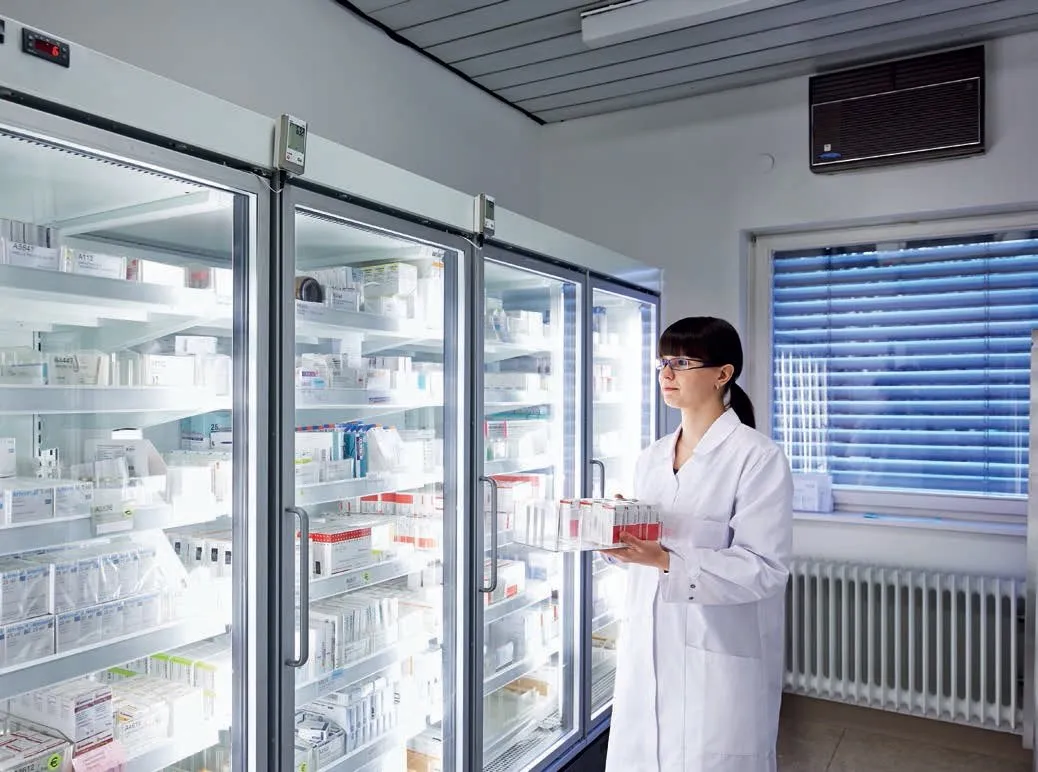
In a pharmacy service, vaccination center or laboratory, the cold chain is not a technical detail: it is patient safety. A medicine or vaccine outside its temperature range can lose effectiveness without any visible change. That is why regulations, such as Colombia’s Resolution 1403 of 2007 on pharmacy-service management, require storage conditions to be controlled and recorded.
What to control
Each product defines its storage conditions on its label or data sheet. The most common:
- Refrigerated (2 °C to 8 °C): most vaccines, insulins and biologics.
- Frozen: some biologics and reagents.
- Controlled room temperature and relative humidity: in storage and dispensing areas.
Beyond the unit’s temperature, it pays to watch what affects it: door openings, power outages and the compressor’s condition.
The limits of manual logs
Paper forms filled in two or three times a day leave important gaps:
- They don’t cover nights, weekends or holidays, when many failures happen.
- A min/max thermometer shows there was an excursion, but not when or for how long.
- They alert no one at the moment the fridge fails.
- They take up clinical staff time and invite transcription errors.
What continuous monitoring adds
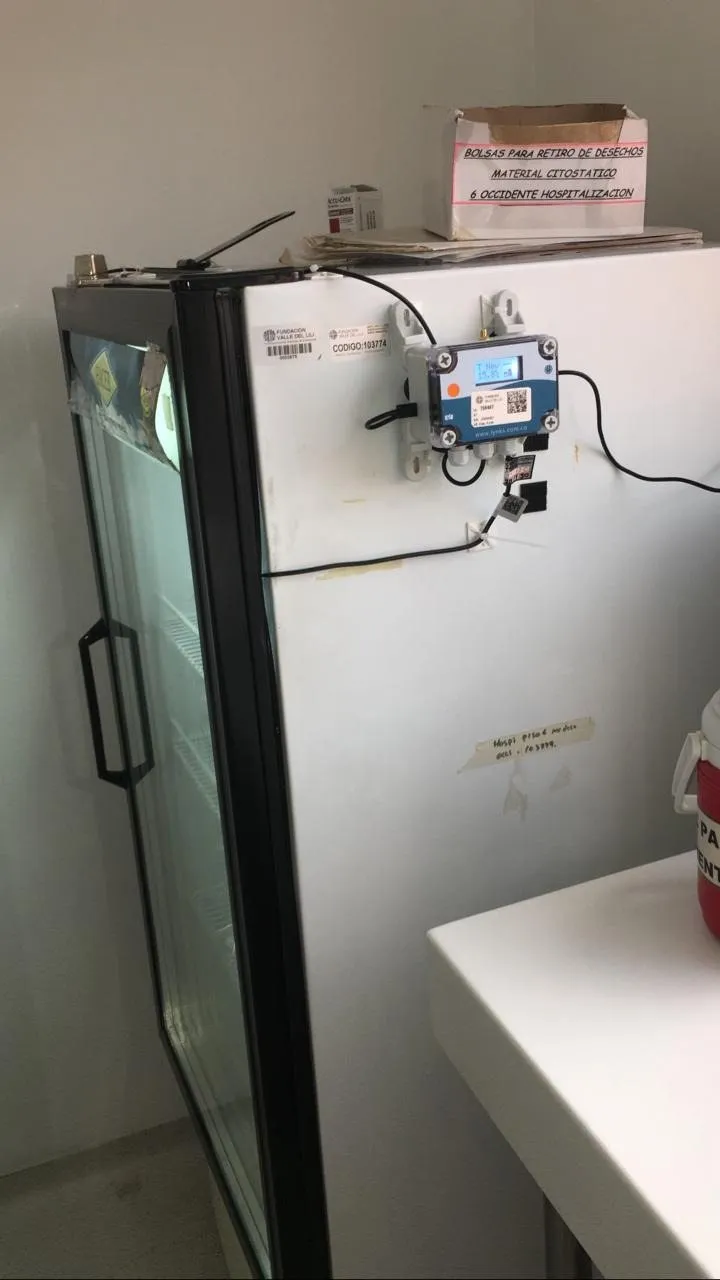
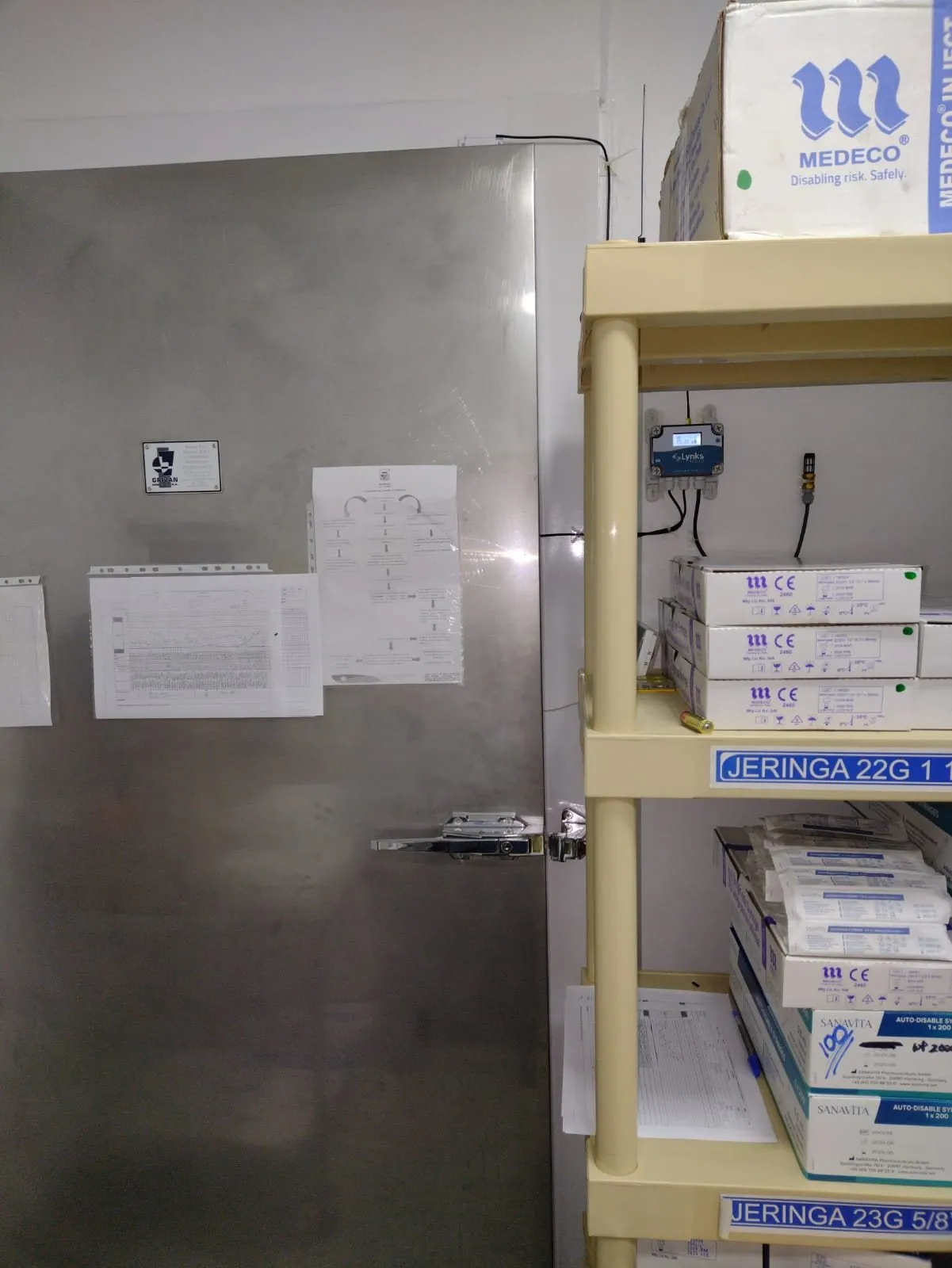
A monitoring system such as LYNKS COLD records temperature automatically, providing:
- Continuous records with time stamps and on-board backup if the connection drops.
- Immediate alerts by email, SMS, WhatsApp or phone call when a limit is exceeded, and another when conditions return to normal.
- Traceability for every excursion: start, duration, peak temperature and probable cause (door opening, power outage, compressor fault).
- PDF reports ready for internal audits and health-authority inspections.
A good sensor must be well installed
- Place the probe where the product is, not next to the door or against the evaporator.
- Use a probe inside a glycol bottle: it buffers fast changes and emulates how the product responds, reducing false alarms from short openings.
- Set alert limits slightly tighter than the product range to leave time to react.
- Document the contingency plan: who is notified, where products are moved and how the event is recorded.
The role of validation
If your organization works under good practices, the monitoring system must be validated: you need to show it measures, records and protects data as expected. Our platform is validated under 21 CFR Part 11 and GAMP 5, and we support the process with the device’s technical documentation. Book a demo to see it.