Water balance with weather stations: ET₀ vs. effective rainfall
How an agro-weather station calculates reference evapotranspiration and why comparing it with effective rainfall improves irrigation planning.
Equipo Lynks · · 5 min read
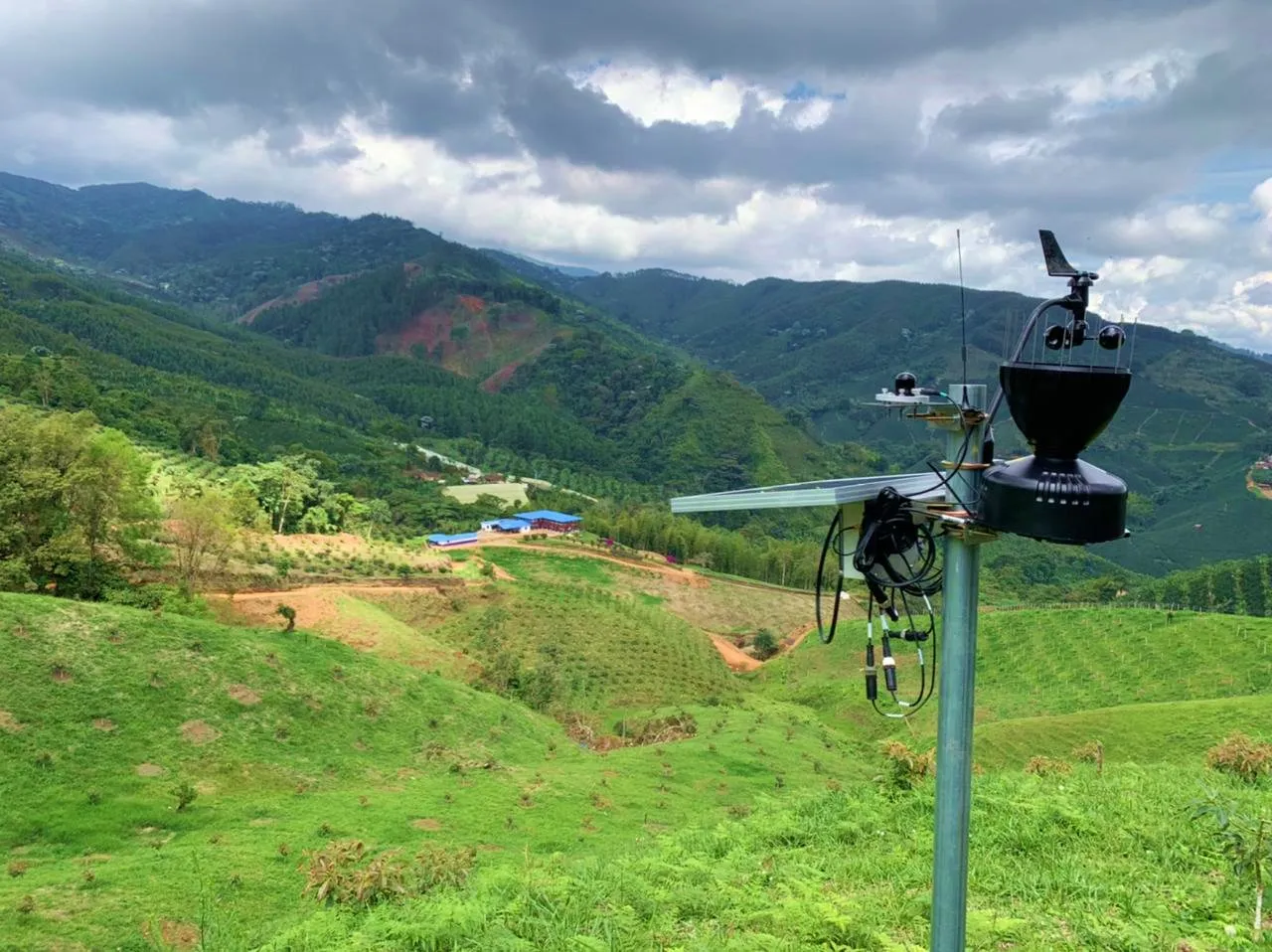
It rained 20 mm last week. Is that enough for the crop? It depends on how much water the crop lost through evaporation and transpiration over the same period. That comparison is the water balance, and an on-farm weather station lets you calculate it every day.
Reference evapotranspiration (ET₀)
ET₀ estimates how much water a reference surface (well-watered grass) loses through soil evaporation and plant transpiration. The most widely used method is FAO-56 Penman-Monteith, which needs:
- Air temperature (maximum and minimum).
- Relative humidity.
- Solar radiation.
- Wind speed.
That is why stations with solar radiation and an anemometer (Standard and Plus packages) give a more accurate ET₀ than a station that only measures temperature and rainfall.
To move from ET₀ to a specific crop’s demand, multiply by the crop coefficient (Kc), which changes with the growth stage.
Effective rainfall
Not all rainfall is available to the crop. Part runs off, part percolates below the root zone and part is intercepted by foliage. Effective rainfall is the fraction the crop actually uses. That is why intensity matters: 30 mm in half an hour is not worth the same as 30 mm spread over a day.
What the balance looks like
LYNKS BI plots ET₀ and effective rainfall day by day, with monthly totals:
- If ET₀ consistently exceeds effective rainfall, there is a water deficit and irrigation must cover the gap.
- If effective rainfall exceeds ET₀, there is a surplus: irrigation can wait and drainage should be watched.
Combined with soil sensors, the balance lets you confirm in the field what the weather indicates.
Other uses of the same station
- Rain intensity in mm/h so sprays don’t get washed off.
- A field-work traffic light to decide when machinery goes out.
- Growing degree days to track crop phenology.
- Vapor pressure deficit (VPD) to flag periods that favor pests and diseases.
A station can start as Basic and grow with new sensors as budget allows. Talk to us to define the right setup for your crop.