Water permits: how to know every day whether your well complies
What a groundwater concession controls, why manual readings fall short and how to turn flow, volume and hours into a daily compliance indicator.
Equipo Lynks · · 6 min read
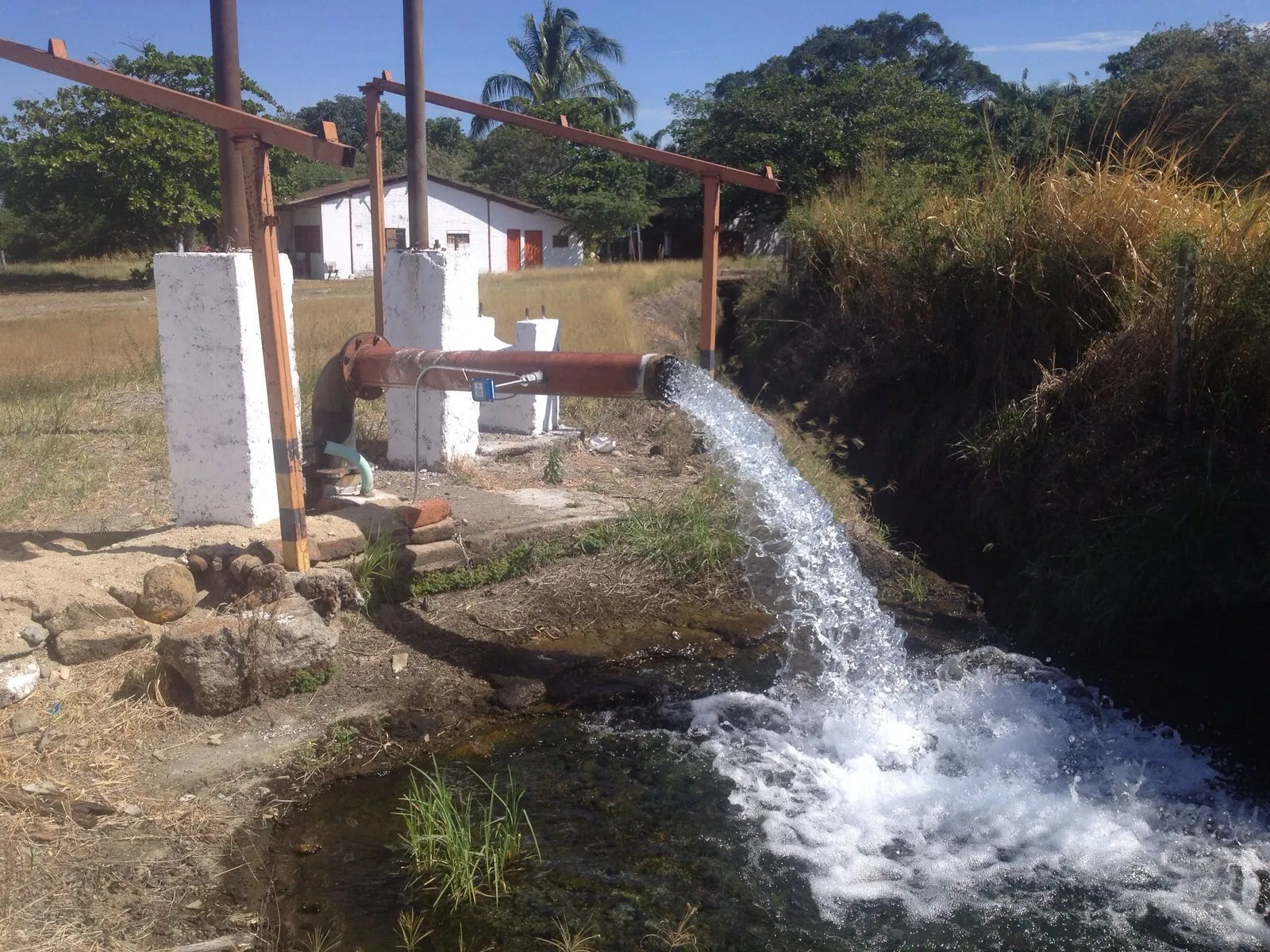
Anyone operating a deep well in Colombia does so under a water concession granted by the competent environmental authority, usually the regional autonomous corporation (CAR). The concession sets how much water can be withdrawn, for how long and under what conditions. Day to day, the challenge is knowing whether you comply today, not just when the report is due or the inspector visits.
What the concession controls
Every resolution is different, but almost all set limits on three variables:
- Flow rate: liters per second that may be withdrawn.
- Volume: cubic meters per day or per month.
- Operating time: permitted pumping hours.
Authorities usually also require withdrawal records and, in many cases, a metering system. Users pay a water-use fee based on the volume withdrawn, so accurate measurement has a direct cost impact.
Why manual readings are not enough
An operator who writes down the totalizer once a day records the volume, but not when or how the water was used. With manual readings there is no way to:
- Detect flow peaks above the concession for a few hours.
- Know how many times the pump started and how long each cycle lasted.
- Relate pumping to aquifer level and energy use.
- Raise an alert in time, before closing the month above the allowed volume.
From data to a compliance indicator
With a flow meter and a level sensor connected, compliance becomes an automatic calculation:
- Instant flow compared with the maximum allowed.
- Accumulated volume for the day and month against the limit, with an end-of-month projection.
- Operating hours accumulated against permitted hours.
- Available water supply: how much volume and how many hours remain this month for each well.
In LYNKS BI these indicators appear as a traffic light per well, and the same setup can validate internal consumption targets, for example per plant area or process.
Well level matters too
Complying is not only about volume. The well’s static and dynamic level lets you calculate drawdown and specific capacity. If the well must drop further and further to deliver the same flow, there may be a risk of aquifer over-exploitation or a pump problem, and you want to know before the next concession renewal.
Where to start
- Review your concession resolution and note the flow, volume and hour limits.
- Check that the well has a suitable pipe section for a flow meter.
- Decide who should receive alerts: operations, environmental and management.
- Start with the highest-flow wells or those with a history of issues.
To see this dashboard with real data, book a demo and we’ll walk you through a sample well.